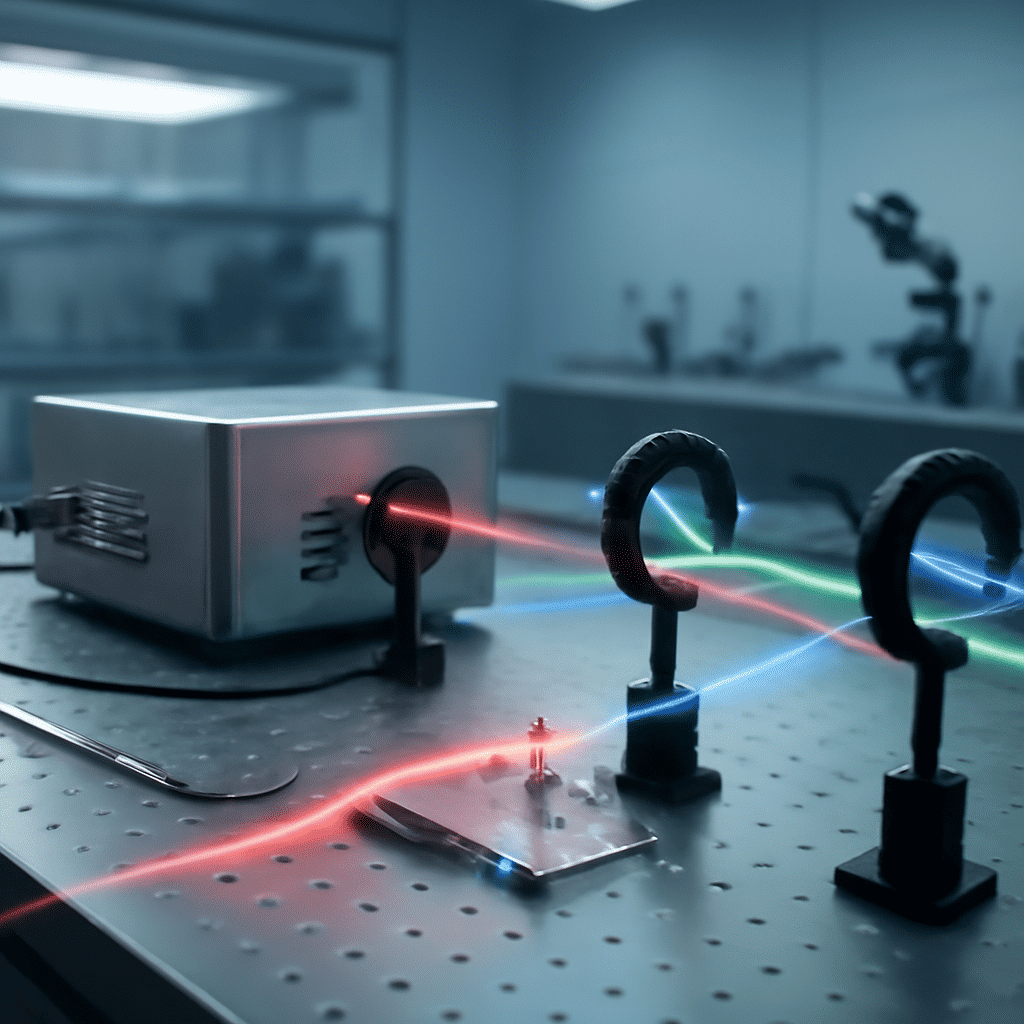
In recent years, the field of medicine has witnessed remarkable advancements, owing significantly to the development of cutting-edge technologies. One such breakthrough is the integration of advanced laser systems into medical procedures. These systems are revolutionizing the way healthcare professionals approach treatment, offering unprecedented levels of precision and efficiency that were once thought unattainable.
The primary appeal of laser systems in medicine lies in their ability to offer minimally invasive solutions. Unlike traditional surgical procedures that often require large incisions and extended recovery periods, laser technology allows for precise targeting of specific tissues, minimizing damage to surrounding areas. This precision not only reduces recovery time for patients but also significantly decreases the risk of complications, making it an attractive option for both doctors and patients.
In the realm of dermatology, lasers have become indispensable tools for treating a variety of conditions. From removing tattoos and unwanted hair to treating vascular lesions and skin resurfacing, laser systems offer targeted solutions with high success rates. Their ability to penetrate different layers of skin with varying wavelengths allows dermatologists to address specific concerns effectively and safely.
Ophthalmology is another area where laser systems have made a profound impact. Procedures such as LASIK (Laser-Assisted In Situ Keratomileusis) have transformed vision correction, providing a quicker recovery and more precise outcomes. Laser technology is also critical in treating conditions such as glaucoma and retinal disorders, offering treatments that are less invasive and more effective than traditional surgical methods.
In oncology, lasers are playing a pivotal role in both the diagnosis and treatment of cancer. Laser systems enable the precise removal of tumors or pre-cancerous growths, often preserving more of the healthy tissue than conventional surgery. They are also used in photodynamic therapy, where they activate photosensitive drugs to target and kill cancer cells, offering a less harmful alternative to radiation therapy.
Moreover, laser systems have crucial applications in cardiovascular medicine. Procedures like endovenous laser therapy (EVLT) are used to treat varicose veins by delivering laser energy directly inside the vein, causing it to collapse and be reabsorbed by the body. This method is far less invasive compared to vein stripping surgery, resulting in quicker patient recovery and minimal scarring.
The versatility of advanced laser systems is matched by their potential for continuous innovation. As technology evolves, so does the capability to develop lasers that are even more precise, efficient, and adaptable to a wider range of medical conditions. Researchers are constantly working on enhancing the precision of laser systems through the use of artificial intelligence and machine learning, promising an era of highly personalized and accurate medical procedures.
However, while the benefits of laser systems are vast, they also come with challenges. The high cost of equipment and the need for specialized training pose obstacles for widespread adoption, particularly in resource-limited healthcare settings. Nonetheless, as the technology becomes more accessible and affordable, it is expected that advanced laser systems will become integral to medical practices worldwide.
In conclusion, advanced laser systems are redefining medical procedures by providing solutions that are less invasive, more precise, and highly efficient. As these technologies continue to evolve, they hold the promise of drastically improving patient outcomes across various medical fields, paving the way for a new era of medical care characterized by safety, accuracy, and rapid recovery.