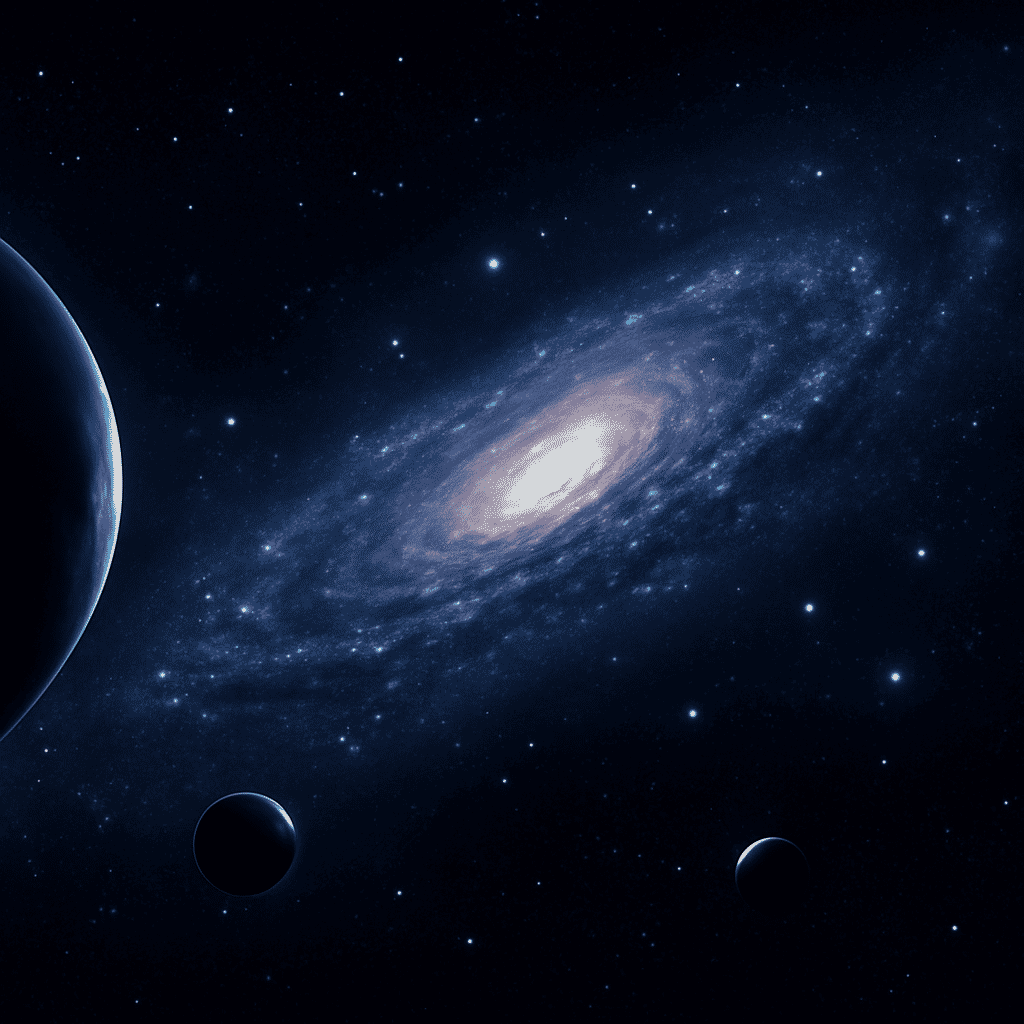
In recent decades, humanity has been both enchanted and perplexed by the possibility of life beyond our blue planet. This fascination is fueled by an ever-growing collection of scientific discoveries and tantalizing clues that suggest we may not be alone in the universe. From potential microbial life on Mars to the fervent search for alien civilizations in extragalactic realms, the quest to discover extraterrestrial life traverses a vast landscape of science, technology, and imagination.
Mars: Our Cosmic Neighbor
Mars has long been a focal point in our search for extraterrestrial life. With its polar ice caps, vast canyons, and ancient riverbeds, the Red Planet tantalizes with hints of a once more hospitable environment. The discovery of recurring slope lineae (dark streaks on Martian cliffs and crater walls) suggests that liquid water might exist, albeit briefly, on the surface today. Water, as we understand, is a critical ingredient for life.
Future missions aim to delve deeper, quite literally, by retrieving samples from the Martian surface and subsurface. These missions hope to uncover signs of microbial life, past or present, hidden away from the harsh surface conditions. If life once thrived, or still survives in some covert niche on Mars, it would profoundly impact our understanding of life's resilience and spread throughout the cosmos.
Moons of the Gas Giants: Hidden Oceans
Beyond Mars, several moons of our solar system's gas giants also present intriguing possibilities. Europa, a moon of Jupiter, and Enceladus, a moon of Saturn, both have subsurface oceans hidden beneath their icy crusts. The European Space Agency's JUICE mission and NASA's Europa Clipper are set to study these worlds in greater detail, searching for biosignatures that might reveal life in these alien oceans.
Enceladus, in particular, has the added intrigue of plumes of water vapor and organic molecules emanating from its south pole—a direct corridor from the hidden ocean to the surface. These discoveries hint at hydrothermal activity on the ocean floor, similar to the conditions around Earth's deep-sea vents where life thrives.
Exoplanets: The Search for Another Earth
The search for extraterrestrial life extends far beyond our solar system. With the discovery of thousands of exoplanets orbiting stars in our galactic neighborhood, the prospect of finding Earth-like planets has never been higher. The key is locating planets within the habitable zone, the region around a star where conditions might be just right for liquid water to exist.
Advanced telescopes like the James Webb Space Telescope are primed to analyze the atmospheres of these distant worlds, searching for chemical markers that could indicate life, such as oxygen, methane, or other biosignatures. Analyzing light from exoplanets offers a snapshot of their atmospheric composition, providing clues about potential life processes.
The Search for Intelligent Life
Besides microbial possibilities, the search for intelligent extraterrestrial civilizations captivates scientists and enthusiasts alike. Initiatives like SETI (Search for Extraterrestrial Intelligence) employ vast arrays of radio telescopes to listen for signals that might indicate technology-driven civilizations. The challenge is enormous, not just in the vastness of the search but also in interpreting signals amidst the cosmic noise.
Finding intelligent life would revolutionize our understanding of consciousness and our place in the universe. It could also lead to unforeseen societal impacts, both in terms of cultural shifts and technological advancements inspired by communication with another civilization.
The Philosophical Implications
While the scientific approach focuses on gathering evidence, the philosophical repercussions of discovering extraterrestrial life stir deep questions about existence itself. Are we alone in the universe, as a unique emergence of consciousness, or are there countless forms and degrees of life, each with their own history and evolution? Such discoveries would challenge our perceptions of life's rarity or ordinariness on a cosmic scale.
The search for extraterrestrial life, whether it yields profound discoveries or continues to spark curiosity and innovation, serves as a testament to humanity's intrinsic desire to explore and understand the unknown. Each step taken into the cosmos expands our horizons, not just outward, but inward, as we reflect on what it means to be alive in this universe. As we stand on the precipice of new discoveries, the possibilities remain as vast as the cosmos itself.